Israel and its predecessors, the Zionist terror groups of Haganah, Irgun and Lehi, committed 33 documented massacres during the ethnic cleansing operations that established the state of Israel.These had deliberate terrorist objectives, to terrify Palestinian farmers, fishermen and villagers in their path into fleeing. These were subsequently misrepresented as "voluntary" abandonment of their properties, to which they have never been allowed to return and many of which were given to Jewish immigrants recruited by Israel to fulfill the Zionist agenda of "ingathering the exiles." The most notorious and heavily publicized Jewish massacre was Deir Yassin, which precipitated one retaliatory massacre of Jews by the Arab Legion of Transjordan at Gush Etzion.
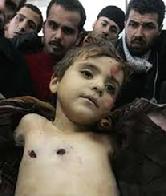
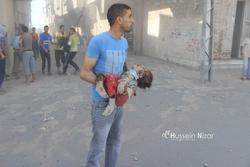
Burned baby, Gaza, 60 years later
This Arab force, the only Arab military potentially able to stop the ethnic cleansing, had otherwise been co-opted by the Zionists in an agreement to allow the Zionists a free hand in exchange for Transjordan's retention of Judea and Samaria, now known as the West Bank.
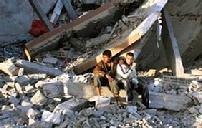
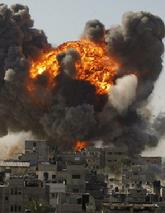
Cast Lead rubble, Gaza, 60 years later
Since then Israel has committed a long series of additional large and small massacres - defined as the direct and deliberate mass murder of defenseless civilians - including the Sabra and Shatila refugee camp massacres of 1982 in Lebanon for which Arial Sharon was held responsible, the Jenin and Nablus massacres in the West Bank in 2002 from which international reporters and humanitarian relief efforts were excluded, the brutal 2006 attacks on Lebanon and Gaza, the "Cast Lead" Gaza massacre of 2008-09 described by the UN's Goldstone Commission, the flotilla massacre of 2010, another attack on Gaza in 2012, and the horrific "Operation Protective Edge" massacre of 2014 again inflicted upon the trapped and helpless population of Gaza. Israeli leaders refer to hese massive periodic assaults on Gaza as "mowing the lawn."
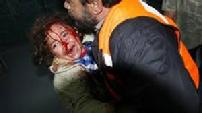
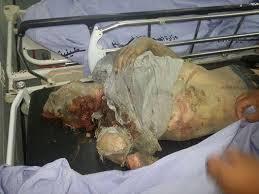
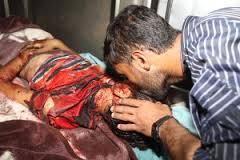
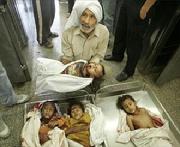
Cast lead casualty
Many of these between 1948 and 2011 have been described and documentedby survivors and witnesses. This list of 63 is by no means exhaustive, excluding another 18 during the Nakba reported by Israeli historian Ilan Pappe, one undocumented massacre of Egyptian POWs and civilians in the Sinai during the 1967 war reported by Bedouin witnesses at the time and supported by later discoveries of mass graves in that area, and the Jenin and Nablus massacres in 2002 during the second intifada. Israel's desperate need to conceal the 1967 Sinai massacre is one possible motive behind its deliberate, bizarre and recklessattack on the USS Liberty on June 8, 1967, which was subsequently whitewashed by the US civilian and military administration in an equally bizarre act of treason at our highest levels of government.
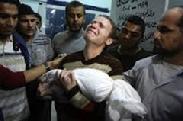
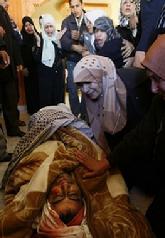
Cast Lead grief
In the last decade... Following the 2006 election victory by Hamas, Israel and the US colluded to overturn this outcome by funding, arming and training their rival, Fatah, resulting in a conflict leaving Hamas victorious but isolated in Gaza and subjected to a suffocating blockade by Israel described as comparable to the Warsaw ghetto by Richard Falk, Princeton Emeritus Professor of International Law and UN Rapporteur for Human Rights in the Occupied Territories. Israel continued relentless attacks by both land and sea upon Gaza, unreported in the US media, evoking retaliatory Qassam rocket attacks widely reported in the US media. Although prolific, these rockets killed less than 20 Israelis in 10 years, but have been used by Israel to justify its relentless aggression.
A cease-fire was signed in June 2008 whereby Hamas agreed to discontinue rocket fire and Israel agreed to relax the blockade and discontinue its attacks. Rockets from Gaza decreased markedly, with a few continuing most likely from non-Hamas factions, but Israel failed to relax its blockade and continued its attacks by both land and sea. After killing six Palestinians on US election day in November 2008 and another two Palestinian children shortly thereafter, Hamas finally resumed Qassam rockets which were used by Israel to justify a massive 3+ week assault on Gaza in December 27, 2008 until January 21, 2009 named "Operation Cast Lead" by Israel.
Cast Lead victim
The results of this assault were investigated by several human rights organizations including a delegation from the National Lawyers Guild and a UN-appointed commission under international jurist Richard Goldstone from South Africa. A condensed version of conclusions from this 575-page report is included below.
"Operation Protective Edge" was another massive, brutal, 50-day attack on Gaza by air, land and sea in July-August, 2014, in which some 2,200 people were killed including over 500 children, vital civilian infrastructure and 17,000 homes were wantonly destroyed, and the already tiny area of Gaza into which its 1.8 million population is crowded was reduced by some 40% to allegedly create a "protective" buffer zone between Israel and the despised and dehumanized Palestinians of Gaza, some 80% of whom are already refugees from Israel's previous aggressions beginning in 1948. Over a half-million were displaced, with most needing emergency food assistance by the UN, which also provided emergency housing for some quarter million in 88 UNRWA schools.
White phosphorous munitions
Since Hamas had discontinued Qassam rocket fire since December 2012, Israel needed a new excuse, using the abduction and death of three Israeli teenagers in the West Bank as provocation although producing no evidence that Hamas was responsible, and claiming a need to destroy Hamas tunnels into Israel. An extensive network of tunnels had been constructed inside Gaza for hiding weapons from Israeli surveillance, with only a few extending into Israel for defensive use against Israeli incursions. The teen abductions were escalated into a series of hostile exchanges used by Israel to justify its massive assault, claiming that the tunnels were for "terrorist attacks" although none were directed at Israeli civilian areas.
White phosphorous victim
Exercising "effective control" over Gaza, Israel remains the Occupying Power and as such is responsible to protect the welfare of the population occupied under the 4th Geneva Convention to which it is a signatory. Its assaults are obviously in gross violatation of this duty. In addition, Israeli assaults grossly violate the UN principle of "proportionality" in the conduct of military operations. Throughout its long history of arbitrary military aggression, Israel has always been able to find or provoke an excuse, with the real reasons concealed and left to speculation by investigative journalists and political scientists. The probable objective of Protective Edge was disruption of the unity government that had recently been forged between Fatah and Hamas. Fatah obligingly and predictably condemned Hamas for starting the fight, reasserting its sole leadership position in Palestine.
Protective Edge home remains
However, the steadfast resistance of Hamas against Israeli violence earned them wide popular respect within the Palestinian community. In order to maintain credibility with the people he pretends to represent, Abbas used Palestine's upgraded UN status to apply for membership in the International Criminal Court and request war crimes investigations of Israel for Operation Protective Edge and its continuing settlement expansion. This investigation was launched by the ICC even before Palestine's formal admission date. Israel responded by withholding customs duties it collects on behalf of the PA, yet another arbitrary violation of its legal oligations.
Protective Edge IDF triumph
Israeli massacres are the most extreme examples of this ongoing, wholesale disregard of international law as well as contratual obligations. These reflect both a collective attitude of special entitlement - above the laws and rules of conduct regulating others - and a deliberate, gratuitous sadism toward those who defy its will. Michel Warshawski, French/Israeli author of Toward an Open Tomb and founder of the joint Israeli/Palestinian "co-resistance" organization, the Alternative Information Center, has written that Israel's lawlessness has inevitably degraded its own society and is propelling it toward self-destruction.
Israel Victorious
It is our hope in 2015 that the International Criminal Court at The Hague will conduct an inquiry at least as thorough as the Goldstone Report below on Israeli atrocities in Operation Protective Edge and finally bring indictments against the responsible decision-makers. This would add a decisive "S" to the Boycott, Divestment and Sanctions (BDS) movement to bring Israel into compliance with international law.
Facts investigated by the Goldstone Commission and its factual and legal findings regarding Israel’s Operation Cast Lead in Gaza
27. The Mission focused (Chapter V) on the process of economic and political isolation imposed by Israel on the Gaza Strip, generally referred to as a "blockade". The blockade comprises measures such as restrictions on the goods that can be imported into Gaza and the closure of border crossings for people, goods and services, sometimes for days, including cuts onthe provision of fuel and electricity. Gaza’s economy is further severely affected by the reductionof the fishing zone open to the Palestinian fishermen and the establishment of a "buffer zone"along the border between Gaza and Israel which reduces the land available for agriculture and industrial activity. In addition to creating an emergency situation, the blockade significantlyweakened the capacities of the population and of the health, water and other public sectors toreact to the emergency created by the military operations.
28. The Mission holds the view that Israel continues to be duty-bound under the Fourth Geneva Convention and to the full extent of the means available to it to ensure the supply of foodstuff, medical and hospital items and others to meet the humanitarian needs of the population of the Gaza Strip without qualification.
2. Overview of Israel's military operations in the Gaza strip and casualties
29. Israel deployed its navy, air force and army in the operation it codenamed "Operation Cast Lead". The military operations in the Gaza Strip included two main phases, the air phase and the air-land phase, and lasted from 27 December 2008 to 18 January 2009. The Israeli offensive began with a week-long air attack, from 27 December until 3 January 2009. The air force continued to play an important role in assisting and covering the ground forces from 3 January to 18 January 2009. The army was responsible for the ground invasion, which began on 3 January 2009 when ground troops entered Gaza from the north and from the east. The available information indicates that the Golani, Givati and Paratrooper Brigades and five Armoured Corps Brigades were involved. The navy was used in part to shell the Gaza coast during the operations. Chapter VI also locates the incidents investigated by the Mission, described in Chapters VII to XV, in the context of the military operations.
30. Statistics about Palestinians who lost their life during the military operations vary. Based on extensive field research, non-governmental organizations place the overall number of persons killed between 1,387 and 1,417. The Gaza authorities report 1,444 fatal casualties. The Government of Israel provides a figure of 1,166. The data provided by non-governmental sources with regard to the percentage of civilians among those killed are generally consistent and raise very serious concerns with regard to the way Israel conducted the military operations in Gaza.
31. According to the Government of Israel, during the military operations there were 4 Israeli fatal casualties in southern Israel, of whom 3 were civilians and one soldier, killed by rockets and mortars attacks by Palestinian armed groups. In addition, 9 Israeli soldiers were killed during the fighting inside the Gaza strip, 4 of whom as a result of friendly fire.
3. Attacks by Israeli forces on government buildings and persons of the Gaza authorities, including police
32. Israeli armed forces launched numerous attacks against buildings and persons of the Gaza authorities. As far as attacks on buildings are concerned, the Mission examined the Israeli strikes against the Palestinian Legislative Council and the Gaza main prison (Chapter VII). Both buildings were destroyed to an extent that puts them out of use. Statements by Israeli Government and armed forces representatives justified the attacks arguing that political and administrative institutions in Gaza are part of the "Hamas terrorist infrastructure". The Mission rejects this position. It finds that there is no evidence that the Legislative Council building and the Gaza main prison made an effective contribution to military action. On the information available to it, the Mission finds that the attacks on these buildings constituted deliberate attacks on civilian objects in violation of the rule of customary international humanitarian law whereby attacks must be strictly limited to military objectives. These facts further indicate the commission of the grave breach of extensive destruction of property, not justified by military necessity and carried out unlawfully and wantonly.
33. The Mission examined the attacks against six police facilities, four of them during the first minutes of the military operations on 27 December 2008, resulting in the death of 99 policemen and nine members of the public. The overall around 240 policemen killed by Israeli forces constitute more than one sixth of the Palestinian casualties. The circumstances of the attacks and the Government of Israel July 2009 report on the military operations clarify that the policemen were deliberately targeted and killed on the ground that the police as an institution, or a large part of the policemen individually, are in the Government of Israel’s view part of the Palestinian military forces in Gaza.
34. To examine whether the attacks against the police were compatible with the principle of distinction between civilian and military objects and persons, the Mission analysed the institutional development of the Gaza police since Hamas took complete control of Gaza in July 2007 and merged the Gaza police with the "Executive Force" it had created after its election victory. The Mission finds that, while a great number of the Gaza policemen were recruited among Hamas supporters or members of Palestinian armed groups, the Gaza police were a civilian law-enforcement agency. The Mission also concludes that the policemen killed on 27 December 2008 cannot be said to have been taking a direct part in hostilities and thus did not lose their civilian immunity from direct attack as civilians on this ground. The Mission accepts that there may be individual members of the Gaza police that were at the same time members of Palestinian armed groups and thus combatants. It concludes, however, that the attacks against the police facilities on the first day of the armed operations failed to strike an acceptable balance between the direct military advantage anticipated (i.e. the killing of those policemen who may have been members of Palestinian armed groups) and the loss of civilian life (i.e. the other policemen killed and members of the public who would inevitably have been present or in the vicinity), and therefore violated international humanitarian law.
4. Obligation to take feasible precautions to protect civilian population and objects by Palestinian armed groups in Gaza
35. The Mission examined whether and to what extent the Palestinian armed groups violated their obligation to exercise care and take feasible precautions to protect the civilian population in Gaza from the inherent dangers of the military operations (Chapter VIII). The Mission was faced with a certain reluctance by the persons it interviewed in Gaza to discuss the activities of the armed groups. On the basis of the information gathered, the Mission found that Palestinian armed groups were present in urban areas during the military operations and launched rockets from urban areas. It may be that the Palestinian combatants did not at all times adequately distinguish themselves from the civilian population. The Mission found no evidence, however, to suggest that Palestinian armed groups either directed civilians to areas where attacks were being launched or that they forced civilians to remain within the vicinity of the attacks.
36. Although the situations investigated by the Mission did not establish the use of mosques for military purposes or to shield military activities, it cannot exclude that this might have occurred in other cases. The Mission did not find any evidence to support the allegations that hospital facilities were used by the Gaza authorities or by Palestinian armed groups to shield military activities and that ambulances were used to transport combatants or for other military purposes. On the basis of its own investigations and the statements by UN officials, the Mission excludes that Palestinian armed groups engaged in combat activities from UN facilities that were used as shelters during the military operations. The Mission cannot, however, discount the possibility that Palestinian armed groups were active in the vicinity of such UN facilities and hospitals. While the conduct of hostilities in built-up areas does not, of itself, constitute a violation of international law, Palestinian armed groups, where they launched attacks close to civilian or protected buildings, unnecessarily exposed the civilian population of Gaza to danger.
5. Obligation to take feasible precautions to protect civilian population and objects by Israel in Gaza
37. The Mission examined how Israeli forces discharged their obligation to take feasible precautions to protect the civilian population of Gaza, including particularly the obligation to give effective advance warning of attacks (Chapter IX). The Mission acknowledges the significant efforts made by Israel to issue warnings through telephone calls, leaflets and radio broadcasts and accepts that in some cases, particularly when the warnings were sufficiently specific, they encouraged residents to leave an area and get out of harms way. However, the Mission also notes factors that significantly undermined the effectiveness of the warnings issued. These include the lack of specificity and thus credibility of many pre-recorded phone messages and leaflets. The credibility of instructions to move to city centres for safety was also diminished by the fact that the city centres themselves had been the subject of intense attacks during the air phase of the military operations. The Mission also examined the practice of dropping lighter explosives on roofs (so-called "roof knocking"). It concludes that this technique is not effective as a warning and constitutes a form of attack against the civilians inhabiting the building. Finally, the Mission stresses that the fact that a warning was issued does not relieve a commander and his subordinates of taking all other feasible measures to distinguish between civilians and combatants.
38. The Mission also examined the precautions taken by Israeli forces in the context of three specific attacks they launched. On 15 January 2009, the UNRWA field office compound in Gaza City came under shelling with high explosive and white phosphorous munitions. The Mission notes that the attack was extremely dangerous, as the compound offered shelter to between 600 and 700 civilians and contained a huge fuel depot. The Israeli forces continued the attack over several hours in spite of having been fully alerted to the risks they created. The Mission concludes that Israeli armed forces violated the customary international law requirement to take all feasible precautions in the choice of means and method of attack with a view to avoiding and in any event minimizing incidental loss of civilian life, injury to civilians and damage to civilian objects.
39. The Mission also finds that, on the same day, the Israeli forces directly and intentionally attacked the Al Quds Hospital in Gaza City and the adjacent ambulance depot with white phosphorous shells. The attack caused fires which took a whole day to extinguish and caused panic among the sick and wounded who had to be evacuated. The Mission finds that no warning was given at any point of an imminent strike. On the basis of its investigation, the Mission rejects the allegation that fire was directed at Israeli forces from within the hospital.
40. The Mission also examined the intense artillery attacks, again including white phosphorous munitions, on Al Wafa hospital in eastern Gaza City, a facility for patients receiving long-term care and suffering from particularly serious injuries. On the basis of the information gathered, the Mission found a violation of the prohibition of attacks on civilian hospitals in the cases of both hospitals. The Mission also highlights that the warnings given by leaflets and pre-recorded phone messages in the case of Al Wafa hospital demonstrate the complete ineffectiveness of certain kinds of routine and generic warnings.
6. Indiscriminate attacks by Israeli forces resulting in the loss of life and injury to civilians
41. The Mission examined the mortar shelling of al-Fakhura junction in Jabalya next to a UNRWA school which at the time was used as a shelter housing more than 1,300 people (Chapter X). The Israeli forces launched at least four mortar shells. One landed in the courtyard of a family home, killing eleven people assembled there. Three other shells landed on al-Fakhura Street, killing at least a further 24 people and injuring as many as 40. The Mission examines in detail statements by Israeli Government representatives alleging that the attack was launched in response to a mortar attack from an armed Palestinian group. While the Mission does not exclude that this may have been the case, it considers the credibility of Israel’s position damaged by the series of inconsistencies, contradictions and factual inaccuracies in the statements justifying the attack.
42. In drawing its legal conclusions on the attack against al-Fakhura junction, the Mission recognizes that for all armies proportionality decisions, weighing the military advantage to be gained against the risk of killing civilians, will present very genuine dilemmas in certain cases. The Mission does not consider this to be such a case. The firing of at least four mortar shells to attempt to kill a small number of specified individuals in a setting where large numbers of civilians were going about their daily business and 1,368 people were sheltering nearby cannot meet the test of what a reasonable commander would have determined to be an acceptable loss of civilian life for the military advantage sought. The Mission considers thus the attack to have been indiscriminate in violation of international law, and to have violated the right to life of the Palestinian civilians killed in these incidents.
7. Deliberate attacks against the civilian population
43. The Mission investigated eleven incidents in which Israeli forces launched direct attacks against civilians with lethal outcome (Chapter XI). The cases examined in this part of the report are, with one exception, all cases in which the facts indicate no justifiable military objective pursued by the attack. The first two incidents are attacks against houses in the Samouni neighbourhood south of Gaza City, including the shelling of a house in which Palestinian civilians had been forced to assemble by the Israeli forces. The following group of seven incidents concern the shooting of civilians while they were trying to leave their homes to walk to a safer place, waving white flags and, in some of the cases, following an injunction from the Israeli forces to do so. The facts gathered by the Mission indicate that all the attacks occurred under circumstances in which the Israeli forces were in control of the area and had previously entered into contact with or at least observed the persons they subsequently attacked, so that they must have been aware of their civilian status. In the majority of these incidents,the consequencesof the Israeli attacks against civilians were aggravated by their subsequent refusal to allow the evacuation of the wounded or to permit access to ambulances.
44. These incidents indicate that the instructions given to the Israeli forces moving into Gaza provided for a low threshold for the use of lethal fire against the civilian population. The Mission found strong corroboration of this trend emerging from its fact-finding in the testimonies of Israeli soldiers collected in two publications it reviewed.
45. The Mission further examined an incident in which a mosque was targeted with a missile during the early evening prayer, resulting in the death of fifteen, and an attack with flechette munitions on a crowd of family and neighbours at a condolence tent, killing five. The Mission finds that both attacks constitute intentional attacks against the civilian population and civilian objects.
46. From the facts ascertained in all the above cases, the Mission finds that the conduct of the Israeli armed forces constitute grave breaches of the Fourth Geneva Convention in respect of wilful killings and wilfully causing great suffering to protected persons and as such give rise to individual criminal responsibility. It also finds that the direct targeting and arbitrary killing of Palestinian civilians is a violation of the right to life.
47. The last incident concerns the launch of a bomb on a house resulting in the killing of 22 family members. Israel’s position in this case is that there was an "operational error" and that the intended target was a neighbouring house storing weapons. On the basis of its investigation, the Mission expresses significant doubts about the Israeli authorities’ account of the incident. The Mission concludes that, if indeed a mistake was made, there could not be said to be a case of wilful killing. State responsibility of Israel for an internationally wrongful act, however, would remain.
8. The use of certain weapons
48. Based on its investigation of incidents involving the use of certain weapons such as white phosphorous and flechette missiles, the Mission, while accepting that white phosphorous is not at this stage proscribed under international law, finds that the Israeli armed forces were systematically reckless in determining its use in built-up areas. Moreover, doctors who treated patients with white phosphorous wounds spoke about the severity and sometimes untreatable nature of the burns caused by the substance. The Mission believes that serious consideration should be given to banning the use of white phosphorous in built-up areas. As to flechettes, the Mission notes that they are an area weapon incapable of discriminating between objectives after detonation. They are, therefore, particularly unsuitable for use in urban settings where there is reason to believe civilians may be present.
49. While the Mission is not in a position to state with certainty that so-called dense inert metal explosive (DIME) munitions were used by the Israeli armed forces, it did receive reports from Palestinian and foreign doctors who operated in Gaza during the military operations of a high percentage of patients with injuries compatible with their impact. DIME weapons and weapons armed with heavy metal are not prohibited under international law as it currently stands, but do raise specific health concerns. Finally, the Mission received allegations that depleted and nondepleted uranium were used by Israeli forces in Gaza. These allegations were not further investigated by the Mission.
9. Attacks on the foundations of civilian life in Gaza: destruction of industrial infrastructure, food production, water installations, sewage treatment and housing
50. The Mission investigated several incidents involving the destruction of industrial infrastructure, food production, water installations, sewage treatment and housing (Chapter XIII). Already at the beginning of the military operations, the Al Bader flour mill was the only flour mill in the Gaza Strip still operating. The flour mill was hit by a series of air strikes on 9 January 2009 after several false warnings had been issued on previous days. The Mission finds that its destruction had no military justification. The nature of the strikes, in particular the precise targeting of crucial machinery, suggests that the intention was to disable the factory in terms of its productive capacity. From the facts it ascertained, the Mission finds that there has been a violation of the grave breaches provisions of the Fourth Geneva Convention. Unlawful and wanton destruction which is not justified by military necessity amounts to a war crime. The Mission also finds that the destruction of the mill was carried out for the purposes of denying sustenance to the civilian population, which is a violation of customary international law and may constitute a war crime. The strike on the flour mill further constitutes a violation of human rights provisions regarding the right to adequate food and means of subsistence.
51. The chicken farms of Mr. Sameh Sawafeary in the Zeitoun neighborhood south of Gaza City reportedly supplied over 10 per cent of the Gaza egg market. Armoured bulldozers of the Israeli forces systematically flattened the chicken coops, killing all 31,000 chickens inside, and destroyed the plant and material necessary for the business. The Mission concludes that this was a deliberate act of wanton destruction not justified by any military necessity and draws the same legal conclusions as in the case of the destruction of the flour mill.
52. Israeli forces also carried out a strike against a wall of one of the raw sewage lagoons of the Gaza Waste Water Treatment Plant, which caused the outflow of more than 200,000 cubic metres of raw sewage into neighboring farmland. The circumstances of the strike on the lagoon suggest that it was deliberate and premeditated. The Namar Wells complex in Jabalya consisted of two water wells, pumping machines, a generator, fuel storage, a reservoir chlorination unit, buildings and related equipment. All were destroyed by multiple air strikes on the first day of the Israeli aerial attack. The Mission considers it unlikely that a target the size of the Namar Wells could have been hit by multiple strikes in error. It found no grounds to suggest that there was any military advantage to be had by hitting the wells and noted that there was no suggestion that Palestinian armed groups had used the wells for any purpose. Considering that the right to drinking water is part of the right to adequate food, the Mission makes the same legal findings as in the case of the Al Bader flour mill.
53. During its visits to the Gaza Strip, the Mission witnessed the extent of the destruction of residential housing caused by air strikes, mortar and artillery shelling, missile strikes, the operation of bulldozers and demolition charges. In some cases, residential neighborhoods were subjected to air-launched bombing and to intensive shelling apparently in the context of the advance of Israeli ground forces. In other cases, the facts gathered by the Mission strongly suggest that the destruction of housing was carried out in the absence of any link to combat engagements with Palestinian armed groups or any other effective contribution to military action. Combining the results of its own fact finding on the ground with UNOSAT imagery and the published testimonies of Israeli soldiers, the Mission concludes that, in addition to the extensive destruction of housing for so-called "operational necessity" during their advance, the Israeli forces engaged in another wave of systematic destruction of civilian buildings during the last three days of their presence in Gaza, aware of the imminence of withdrawal. The conduct of the Israeli forces in this respect violated the principle of distinction between civilian and military objects and amounted to the grave breach of "extensive destruction … of property, not justified by military necessity and carried out unlawfully and wantonly". Israeli forces further violated the right to adequate housing of the families concerned.
54. The attacks on industrial facilities, food production and water infrastructure investigated by the Mission are part of a broader pattern of destruction, which includes the destruction of the only cement packaging plant in Gaza (the Atta Abu Jubbah plant), the Abu Eida factories for ready-mix concrete, further chicken farms and the Al Wadia Group’s foods and drinks factories. The facts ascertained by the Mission indicate that there was a deliberate and systematic policy on the part of the Israeli armed forces to target industrial sites and water installations.
10. The use of Palestinian civilians as human shields
55. The Mission investigated four incidents in which Israeli forces coerced Palestinian civilian men at gun point to take part in house searches during the military operations (Chapter XIV). The Palestinian men were blindfolded and handcuffed as they were forced to enter houses ahead of the Israeli soldiers. In one of the incidents, Israeli forces repeatedly forced a man to enter a house in which Palestinian combatants were hiding. Published testimonies of Israeli soldiers who took part in the military operations confirm the continued use of this practice, in spite of clear orders from Israel’s High Court to the armed forces to put an end to it and repeated public assurances from the armed forces that the practice had been discontinued. The Mission concludes that this practice amounts to the use of Palestinian civilians as human shields and is therefore prohibited by international humanitarian law. It puts the right to life of the civilians at risk in an arbitrary and unlawful manner and constitutes cruel and inhuman treatment. The use of human shields also is a war crime. The Palestinian men used as human shields were questioned under threat of death or injury to extract information about Hamas, Palestinian combatants and tunnels. This constitutes a further violation of international humanitarian law.
In a supreme demonstration of the power of the Israel lobby over the Congress of the United States, the US House of Representatives voted on Oct. 23, 2009 to repudiate this report by a UN Commission headed by one of the world's leading international (Jewish and pro-Israel) jurists by an overwhelming margin of 344 to 36.
The Lobby pressure has continued relentlessly. On April 14, 2011 the US Senate unanimously approved a resolution calling upon the UN to rescind the Goldstone report based upon Judge Goldstone's tentative "reconsideration" (headline language of The Washington Post op-ed) of one among dozens of "potential war crimes" that might be revised pending more information from Israel. Goldstone stated that "If I had known then what I know now" it "would have been a different document."
Of course, with more information it would inevitably have been a little different, but how? Would it have more or less definitively identified Israel's criminal conduct? This op-ed was written following massive and relentless pressure upon Judge Goldstone by Israel and the international pro-Israel Jewish lobbies including his own in South Africa. His earlier NY Times op-ed was much bolder and undoubtedly exacerbated the pressure upon him from his own community which even sought to block his attendance at a grandson's bar mitzvah.
However, Goldstone was careful to say "I" rather than "we" and the three other commission members declared their unequivocal support for the commission's findings. Moreover, the UN's McGowan Davis follow-up committee found"no indication that Israel has opened investigations into the actions of those who designed, planned, ordered and oversaw Operation Cast Lead" and recommended referral to the International Criminal Court.
Demand Freedom, Justice and Equality in the Holy Land